Burst Pro 2.0 Vs Waterpik Sonic-Fusion 2.0
Side by side on motion, gums, braces, pressure sensor, battery, heads, app and three-year cost. The short answer comes first.
Our call: for most people, the Burst Pro 2.0. Pick the Waterpik Sonic-Fusion 2.0 instead if this is you: one countertop device if you already know you will not string-floss.
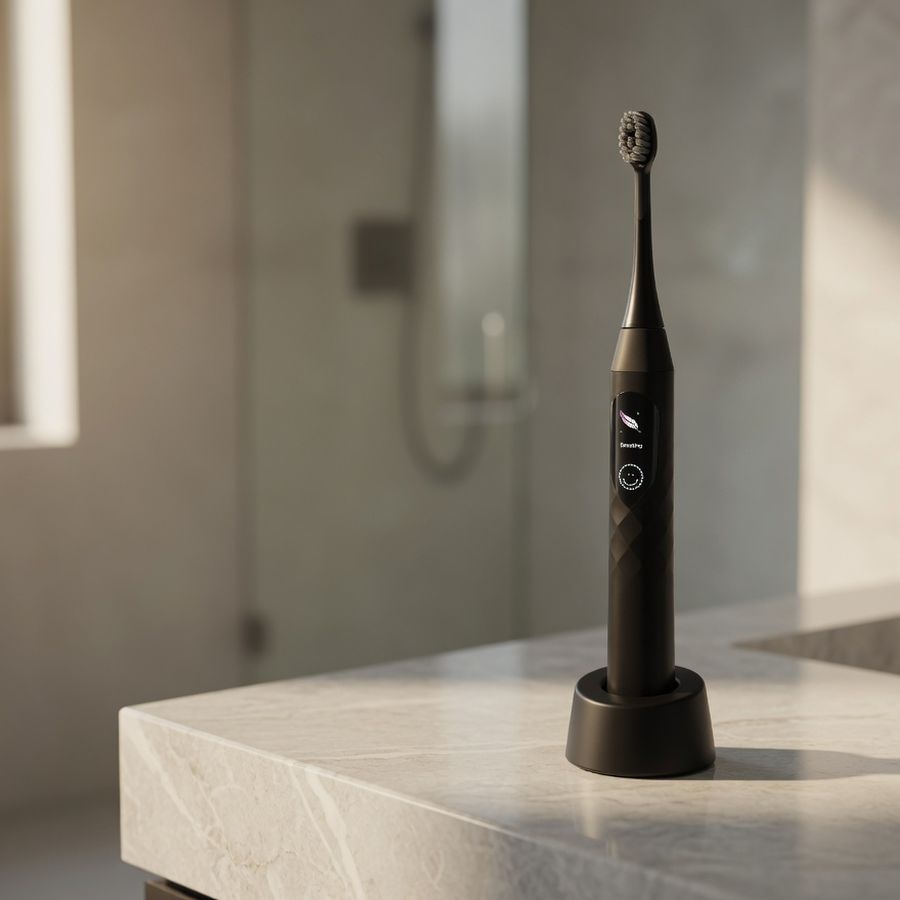
Burst Pro 2.0
About $90 · ranked #9 of 17
Our pick in this pair
- SonicMotion
- 270 daysBattery
- YesPressure sensor
- $210Three-year cost
Best for: someone who hates charging a toothbrush and will live inside a refill subscription.
Check today's Burst Pro 2.0 price →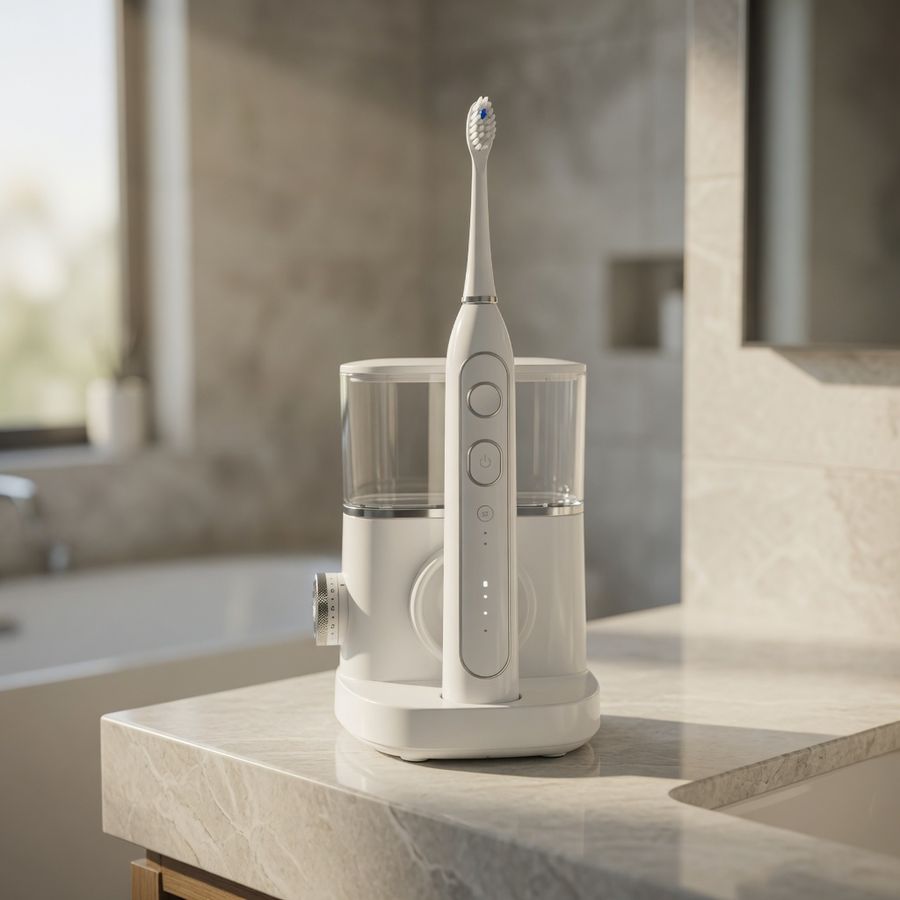
Waterpik Sonic-Fusion 2.0
About $180 · ranked #14 of 17
The alternative
- Sonic + water flosserMotion
- 14 daysBattery
- YesPressure sensor
- $324Three-year cost
Best for: one countertop device if you already know you will not string-floss.
Check today's Waterpik Sonic-Fusion 2.0 price →Price buttons are Amazon affiliate links. A commission does not change which brush wins this page. Disclosure.
Where Do They Differ?
| Where they differ | Burst Pro 2.0 | Waterpik Sonic-Fusion 2.0 |
|---|---|---|
| Street price | $90lower | $180 |
| Motion | Sonic | Sonic + water flosser |
| Battery | 270 dayslonger | 14 days |
| Modes | 5 | 3 |
| Travel case | No | Yes |
| ADA Seal | Not verified | Verified |
| Heads per year, about | $40lower | $48 |
| Three-year cost | $210lower | $324 |
| Warranty | 2 yr | 3 yrlonger |
| Built-in floss or jet | No | Yes |
Only the lines where the two brushes differ. A tinted cell is the plain better number on that line: cheaper, longer, or the feature is there.
Jump to a question
- How Do They Clean
- Which Is Better For Sensitive Gums
- Which Is Better With Braces
- Which Stops You Brushing Too Hard
- Which Battery Lasts Longer
- Do The Replacement Heads Cross Over
- Which Has An App, Timer Or Screen
- Which Costs Less Over Three Years
- Are They ADA Seal Accepted
- Which One Should You Buy
- Full spec sheet
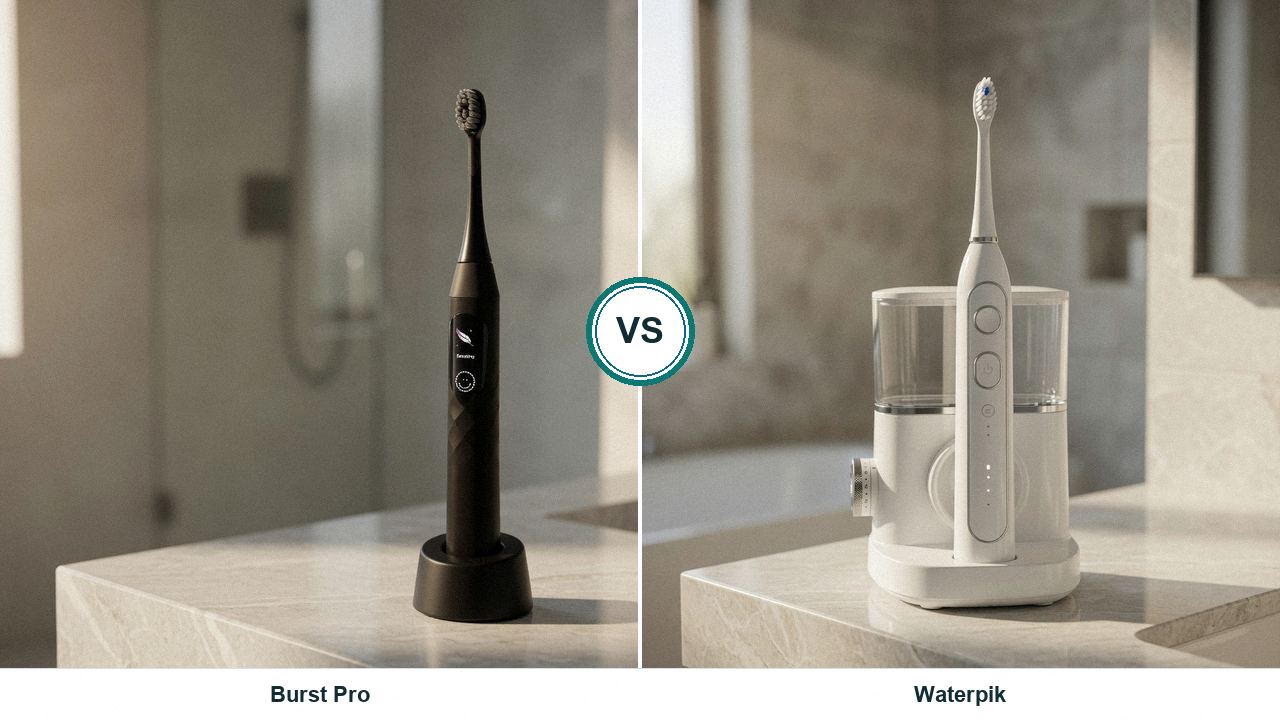
They do not share a motion, so the first question is feel, and the second is the bill. Specs are researched from manufacturer pages and named 2026 reviews. Where a number was not published, the cell says n/a. Nothing here is a personal bench log. The method is on how we compare.
How Do They Clean?
The Burst Pro 2.0 is sonic. The Waterpik Sonic-Fusion 2.0 is sonic + water flosser. That changes how each one feels in the mouth.
Sonic, Sonic speeds that vary by mode. Whitening on the original Burst line is quoted near 33,000 VPM. Pro 2.0 does not publish one number for every mode.. Sonic, charcoal or super-soft tapered bristles, built with a large dental-pro panel.
Sonic + water flosser, About 30,000 brush strokes per minute, two brush speeds. Flosser: 10 pressure settings, about 1,400 pulses per minute.. Sonic brush head with a water flosser built through the bristles. Countertop base, not a travel brush.
A round oscillating head is a tooth-by-tooth scrub. A sonic head is a sweep, and the fluid it throws is part of the clean. A jet or a water flosser is a third job. Do not score those as if they were the same machine.
Which Is Better For Sensitive Gums?
The Burst Pro 2.0 is the sonic one, the feel dentists usually suggest first for exposed roots.
Sensitive mode plus a pressure sensor.
Low brush speed and low floss pressure. Start there. The jet is the thing that surprises people.
Dentists who talk about recession in public usually point at a sonic brush before a round oscillating one, because the sweep feels less sharp on exposed roots. That is a feel call, not a license to skip the pressure sensor. If a brush has no sensor, technique is the whole safety system.
Which Is Better With Braces?
The Waterpik Sonic-Fusion 2.0 has water flossing built in, which helps the gumline under the wire.
No ortho-specific program.
Water flossing is genuinely useful around brackets. This is one of the few brushes where that is built in.
Round heads reach the tooth face around a bracket more easily for a lot of people. Long sonic heads cover more enamel per second and bump the wire more often. A built-in flosser helps the gumline under the wire, which a brush alone does not. None of these replace the conversation with your orthodontist. Ask before you aim a jet at hardware.
Which Stops You Brushing Too Hard?
Both warn you when you press too hard. How they warn you is the difference.
Real-time pressure feedback on the Pro.
Flosser has 10 pressure settings. A brush-style gum pressure sensor is not the feature here.
A hidden sensor that only cuts the pulsations is easy to miss. A light ring you can see in a mirror is the one people actually change behavior for. Adaptive systems that turn the motor down are a step past a warning. No sensor at all means the brush will happily let you scrub a groove into the gum.
Which Battery Lasts Longer?
The Burst Pro 2.0 has the longer published runtime: 270 days against 14.
270 days. Burst rates the Pro 2.0 up to 9 months. That is the outlier in this database. USB-C. Magnetic wall mount included.
14 days. Handle rechargeable, about 2 weeks or 56 minutes of runtime. Flossing is powered from the corded base. 16 oz reservoir.
Runtime assumes two minutes, twice a day, on a gentler mode. Whitening modes, radios, and jets spend it faster. A NiMH pack that wants an overnight charge is a different product from a lithium handle that is full before dinner.
Do The Replacement Heads Cross Over?
No. The heads do not cross, so refills you already own may not fit.
Burst heads only. Subscription refills. About $10 a head. Subscription heads often $8 to $15. Lifetime warranty is tied to staying on the subscription in Burst's own terms. Read that before you count it.
Waterpik flossing brush heads. Full-size and compact in the Professional kit. Not Sonicare, not Oral-B. About $12 a head. Flossing heads cost more than a plain sonic refill. Budget the head, not just the $180 handle.
The American Dental Association tells people to change a brush about every three months, or sooner if the bristles splay. Four heads a year is the math we use. A subscription only helps if you were going to buy that brand's head anyway.
Which Has An App, Timer Or Screen?
Neither needs an app. Both have a timer.
App: no app. Timer: 2-minute timer with LED display. Handle screen: yes.
App: no app. Timer: 2-minute timer and 30-second pacer. Handle screen: no.
Apps coach coverage. They do not clean teeth. If you will not put a phone on the sink, a brush that needs the phone for its headline feature is the wrong spend. A timer and a quadrant pacer are the features that change a two-minute session. Quadpacer is Philips's name for that 30-second buzz. Oral-B does the same job without the trademark.
Which Costs Less Over Three Years?
The Burst Pro 2.0 costs less over three years: $210 against $324.
Handle $90 plus about $40 a year in heads: $210 over three years. Warranty 2 years.
Handle $180 plus about $48 a year in heads: $324 over three years. Warranty 3 years.
Street handle prices here are typical US prices as of October 2026, not a live checkout. A subscription that unlocks a warranty is a cost, not a gift. Read the cancel terms before you count the years.
Are They ADA Seal Accepted?
Only the Waterpik Sonic-Fusion 2.0 has a verified ADA Seal.
Not verified. We could not confirm acceptance, so we do not imply it.
Accepted, per the manufacturer or a current product page.
The Seal means the American Dental Association accepted a safety and efficacy file for that product. It is not a ranking, and a missing seal is not a verdict that the brush fails. Some brands never file. Neither brush is a treatment for gum disease. Bleeding that continues after a week of gentle brushing is a dentist appointment, not a mode setting.
Which One Should You Buy?
For most people in this pair, buy the Burst Pro 2.0. Buy the Waterpik Sonic-Fusion 2.0 if this sounds like you: one countertop device if you already know you will not string-floss.
Choose it for: someone who hates charging a toothbrush and will live inside a refill subscription.
Choose it for: one countertop device if you already know you will not string-floss.
Editorial rank on this site puts the Burst Pro 2.0 ahead. That rank is a buying call. It is not a claim that the other brush cleans worse in a lab we did not run.
What Goes Wrong With Each?
- Not ADA Seal accepted. Burst has said the seal is not in place.
- Lifetime warranty is subscription-shaped. Cancel and the promise changes.
- Heavy handle. About 230 g, in the same weight class as the Dyson, without the camera or the jet.
- Needs counter space and an outlet. Useless as a travel brush.
- Messier than a normal brush. Water goes where you aim it, including the mirror.
- Replacement flossing heads are a closed, pricier ecosystem
Full Spec Sheet
| Spec | Burst Pro 2.0 | Waterpik Sonic-Fusion 2.0 |
|---|---|---|
| Street price | $90 | $180 |
| Motion | Sonic | Sonic + water flosser |
| Movements | Sonic speeds that vary by mode. Whitening on the original Burst line is quoted near 33,000 VPM. Pro 2.0 does not publish one number for every mode. | About 30,000 brush strokes per minute, two brush speeds. Flosser: 10 pressure settings, about 1,400 pulses per minute. |
| Modes | 5 | 3 |
| Mode list | Whitening, Clean, Massage, Sensitive, Freshen | Brush, Floss, Brush + Floss |
| Pressure sensor | Real-time pressure feedback on the Pro. | Flosser has 10 pressure settings. A brush-style gum pressure sensor is not the feature here. |
| Timer | 2-minute timer with LED display | 2-minute timer and 30-second pacer |
| App | No | No |
| Handle display | Yes | No |
| Battery | 270 days | 14 days |
| Charge time | n/a | n/a |
| Waterproofing | Bathroom-safe handle. | Handle is bathroom-safe. The base is a countertop appliance. It needs an outlet. |
| Travel case | No | Yes |
| Noise | Sonic hum. Handle is on the heavy side, around the same class as a loaded premium brush. | Brush hum plus water-flosser pump. Louder than a bare sonic brush. Not a 6 a.m. hotel brush. |
| ADA Seal verified | No | Yes |
| Head price, about | $10 | $12 |
| Heads, year-one estimate | $40 | $48 |
| 3-year cash | $210 | $324 |
| Handle weight | 230 g | n/a |
| Warranty | 2 yr | 3 yr |
| Built-in floss or jet | No | Yes |
| Camera | No | No |
| Subscription heads | Yes | No |
| Best for | Someone who hates charging a toothbrush and will live inside a refill subscription | One countertop device if you already know you will not string-floss |
How Do These Two Sit In The Wider Rankings?
Sitewide, the brush we point at first is the Oral-B iO Series 3, with the Philips Sonicare 4100 next to it. This pair is one cell in that table. See the best picks by need if you have not picked a motion yet, or open the Brush Finder if budget and gums are the whole question.
External reading that matches a claim on this page: the ADA toothbrush overview for the three-month head swap and the Seal, Oral-B's iO guide for series features, and Dyson's CameraJet page for the 2026 jet brush. A brand page is a spec source, not a referee.
Short Answers
What is the difference between the Burst Pro 2.0 and the Waterpik Sonic-Fusion 2.0?
The Burst Pro 2.0 is sonic. The Waterpik Sonic-Fusion 2.0 is sonic + water flosser. That changes how each one feels in the mouth. Burst Pro 2.0: Sonic, Sonic speeds that vary by mode. Whitening on the original Burst line is quoted near 33,000 VPM. Pro 2.0 does not publish one number for every mode.. Sonic, charcoal or super-soft tapered bristles, built with a large dental-pro panel. Waterpik Sonic-Fusion 2.0: Sonic + water flosser, About 30,000 brush strokes per minute, two brush speeds. Flosser: 10 pressure settings, about 1,400 pulses per minute.. Sonic brush head with a water flosser built through the bristles. Countertop base, not a travel brush. A round oscillating head is a tooth-by-tooth scrub. A sonic head is a sweep, and the fluid it throws is part of the clean. A jet or a water flosser is a third job. Do not score those as if they were the same machine.
Which is better for sensitive teeth, the Burst Pro 2.0 or the Waterpik Sonic-Fusion 2.0?
The Burst Pro 2.0 is the sonic one, the feel dentists usually suggest first for exposed roots. Burst Pro 2.0: Sensitive mode plus a pressure sensor. Waterpik Sonic-Fusion 2.0: Low brush speed and low floss pressure. Start there. The jet is the thing that surprises people. Dentists who talk about recession in public usually point at a sonic brush before a round oscillating one, because the sweep feels less sharp on exposed roots. That is a feel call, not a license to skip the pressure sensor. If a brush has no sensor, technique is the whole safety system.
Which is better with braces, the Burst Pro 2.0 or the Waterpik Sonic-Fusion 2.0?
The Waterpik Sonic-Fusion 2.0 has water flossing built in, which helps the gumline under the wire. Burst Pro 2.0: No ortho-specific program. Waterpik Sonic-Fusion 2.0: Water flossing is genuinely useful around brackets. This is one of the few brushes where that is built in. Round heads reach the tooth face around a bracket more easily for a lot of people. Long sonic heads cover more enamel per second and bump the wire more often. A built-in flosser helps the gumline under the wire, which a brush alone does not. None of these replace the conversation with your orthodontist. Ask before you aim a jet at hardware.
Do the Burst Pro 2.0 and the Waterpik Sonic-Fusion 2.0 stop you brushing too hard?
Both warn you when you press too hard. How they warn you is the difference. Burst Pro 2.0: Real-time pressure feedback on the Pro. Waterpik Sonic-Fusion 2.0: Flosser has 10 pressure settings. A brush-style gum pressure sensor is not the feature here. A hidden sensor that only cuts the pulsations is easy to miss. A light ring you can see in a mirror is the one people actually change behavior for. Adaptive systems that turn the motor down are a step past a warning. No sensor at all means the brush will happily let you scrub a groove into the gum.
How long do the Burst Pro 2.0 and Waterpik Sonic-Fusion 2.0 batteries last?
The Burst Pro 2.0 has the longer published runtime: 270 days against 14. Burst Pro 2.0: 270 days. Burst rates the Pro 2.0 up to 9 months. That is the outlier in this database. USB-C. Magnetic wall mount included. Waterpik Sonic-Fusion 2.0: 14 days. Handle rechargeable, about 2 weeks or 56 minutes of runtime. Flossing is powered from the corded base. 16 oz reservoir. Runtime assumes two minutes, twice a day, on a gentler mode. Whitening modes, radios, and jets spend it faster. A NiMH pack that wants an overnight charge is a different product from a lithium handle that is full before dinner.
Will replacement heads from one fit the other?
No. The heads do not cross, so refills you already own may not fit. Burst Pro 2.0: Burst heads only. Subscription refills. About $10 a head. Subscription heads often $8 to $15. Lifetime warranty is tied to staying on the subscription in Burst's own terms. Read that before you count it. Waterpik Sonic-Fusion 2.0: Waterpik flossing brush heads. Full-size and compact in the Professional kit. Not Sonicare, not Oral-B. About $12 a head. Flossing heads cost more than a plain sonic refill. Budget the head, not just the $180 handle. The American Dental Association tells people to change a brush about every three months, or sooner if the bristles splay. Four heads a year is the math we use. A subscription only helps if you were going to buy that brand's head anyway.